
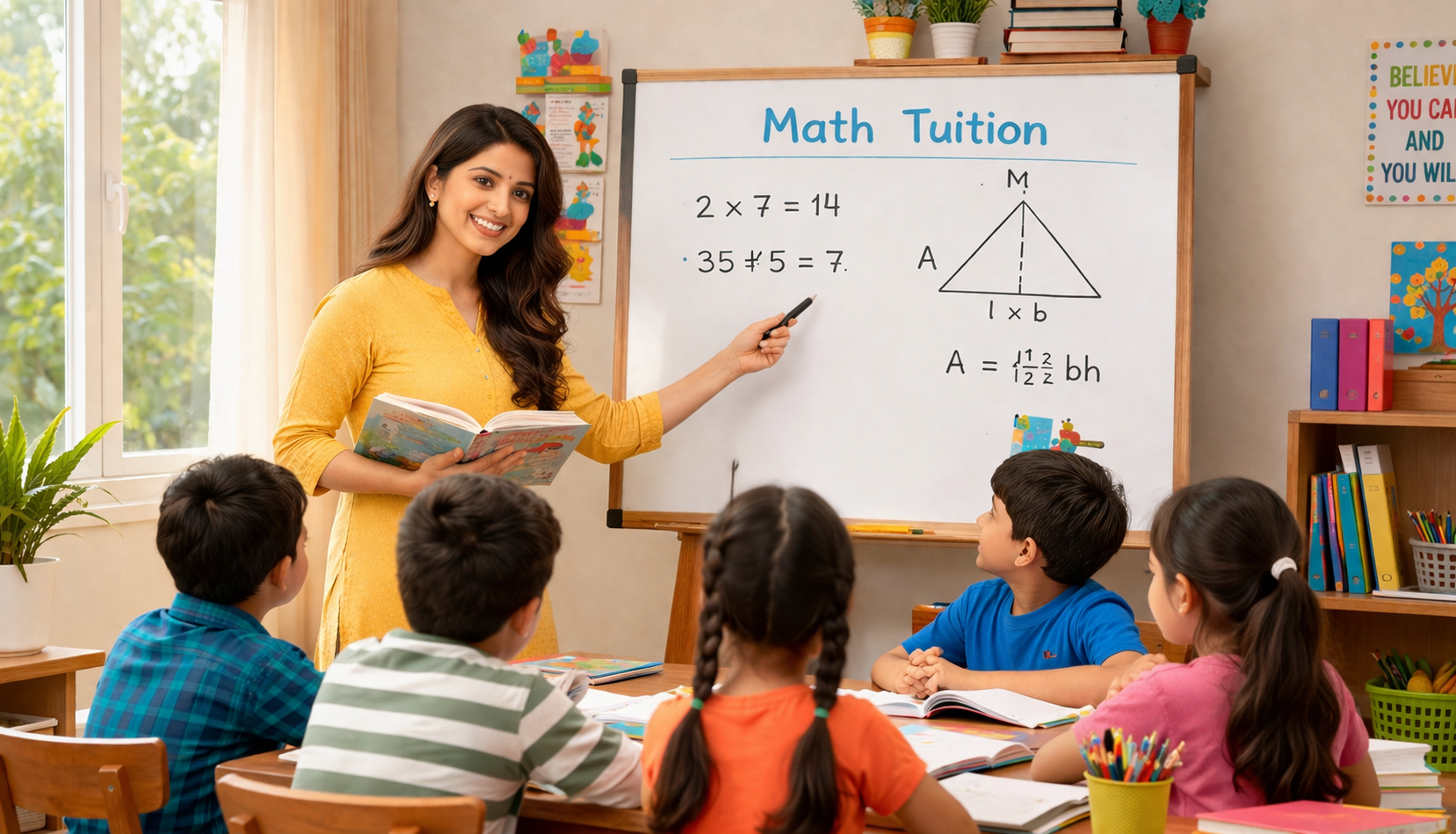
Students Tuition Program (1st Class to 9th Standard)
A structured tuition program for students from 1st to 9th standard plays a crucial role in building strong academic foundations, improving confidence, and ensuring consistent performance across subjects. At this stage, students require guided learning, conceptual clarity, and personalized attention to develop both academic and personal skills. Below is a detailed professional overview of a comprehensive tuition system designed for school students.
Strong Foundation Building
Conceptual Understanding
A strong academic journey begins with clear conceptual understanding. Tuition classes focus on simplifying complex topics into easy-to-understand concepts, especially in subjects like Mathematics and Science. Instead of rote memorization, students are encouraged to understand the “why” behind every topic. This approach helps students retain information longer and apply knowledge in real-life situations. Concept-based learning also prepares students for higher education, where analytical thinking becomes essential. Teachers use practical examples, visual aids, and real-life scenarios to ensure that students grasp each concept thoroughly. This method reduces confusion and builds confidence in tackling difficult questions independently.
Basic Skill Development
At the primary and middle school levels, developing basic skills such as reading, writing, calculation, and comprehension is essential. Tuition classes ensure that these fundamental skills are strengthened through regular practice. Students are trained to improve handwriting, reading fluency, grammar usage, and problem-solving abilities. This continuous improvement helps them perform better in school exams and daily assignments. Skill development is not limited to academics; it also includes time management and discipline, which are vital for long-term success.
Subject-Wise Clarity
Each subject requires a unique approach, and tuition classes provide subject-wise attention. For example, Mathematics focuses on practice and problem-solving techniques, while Science emphasizes understanding concepts and experiments. Language subjects focus on grammar, vocabulary, and communication skills. Teachers identify weak areas in each subject and provide targeted support to improve performance. This personalized approach ensures that students do not fall behind in any subject and maintain balanced academic growth.
Step-by-Step Learning Approach
Students from 1st to 9th standard benefit greatly from a step-by-step teaching methodology. Lessons are structured in a gradual manner, starting from basic concepts and moving toward advanced topics. This systematic progression prevents students from feeling overwhelmed and helps them build confidence at each stage. Teachers ensure that students fully understand one topic before moving to the next, reducing learning gaps and improving overall academic performance.
Regular Revision Techniques
Revision is key to long-term retention. Tuition programs incorporate daily, weekly, and monthly revision strategies to reinforce learning. Regular tests, worksheets, and practice sessions help students recall what they have learned and identify areas that need improvement. Revision techniques such as mind maps, summaries, and quick quizzes make learning engaging and effective. This continuous reinforcement ensures that students are always prepared for exams.
Personalized Attention and Guidance
Individual Learning Support
Every student has a different learning pace and style. Tuition classes provide individual attention to ensure that each student understands the concepts clearly. Teachers focus on slow learners by giving extra time and practice while also challenging advanced learners with additional exercises. This personalized approach helps in maximizing each student’s potential and ensures no one is left behind.
Doubt Clearing Sessions
Doubt clarification is one of the biggest advantages of tuition classes. Students often hesitate to ask questions in school, but in tuition, they get a comfortable environment to clear their doubts. Regular doubt-clearing sessions help students understand topics deeply and remove confusion. This builds confidence and encourages active participation in learning.
Progress Monitoring
Continuous assessment is essential to track student improvement. Tuition programs include regular tests, assignments, and performance evaluations. Teachers maintain records of each student’s progress and provide feedback to both students and parents. This helps in identifying strengths and weaknesses and allows timely corrective actions.
Motivation and Confidence Building
Many students struggle with low confidence due to academic pressure. Tuition classes focus on motivating students through positive reinforcement, encouragement, and rewards. Teachers guide students to overcome fear of exams and build a positive attitude toward learning. Confidence building plays a major role in improving academic performance and overall personality.
Parent-Teacher Interaction
Regular communication between parents and teachers ensures better student development. Tuition centers often conduct meetings to discuss student progress, behavior, and improvement strategies. This collaboration helps parents understand their child’s needs and support them effectively at home.
Exam Preparation and Performance Improvement
Structured Syllabus Coverage
Tuition programs follow a well-planned schedule to complete the syllabus on time. Each subject is covered systematically, ensuring that students are well-prepared before exams. This structured approach reduces last-minute stress and allows sufficient time for revision.
Practice Tests and Mock Exams
Regular tests and mock exams simulate real exam conditions. This helps students get familiar with exam patterns, time management, and question types. Practice tests also improve speed and accuracy, which are crucial for scoring high marks.
Time Management Skills
Students are trained to manage their time effectively during exams. Teachers provide strategies for dividing time between different sections and prioritizing questions. This skill not only helps in exams but also in daily life activities.
Error Analysis and Improvement
After every test, teachers analyze student performance and identify common mistakes. Students are guided on how to avoid these errors in the future. This continuous improvement process helps in achieving better results over time.
Stress Management Techniques
Exams can be stressful for students. Tuition classes teach relaxation techniques, proper study planning, and positive thinking to reduce anxiety. A stress-free mind helps students perform better and stay focused.
Holistic Development of Students
Communication Skills Development
Apart from academics, communication skills are essential for overall growth. Tuition classes encourage students to speak, present, and express their ideas confidently. This improves their language skills and personality.
Discipline and Responsibility
Regular attendance, homework completion, and adherence to schedules instill discipline in students. Tuition programs teach students to take responsibility for their learning and manage their tasks efficiently.
Critical Thinking and Problem Solving
Students are encouraged to think critically and solve problems logically. This develops analytical skills, which are important for higher education and career success.
Group Learning and Interaction
Group discussions and collaborative learning activities help students learn from each other. This improves teamwork and social skills, making learning more engaging and effective.
Adaptability to Academic Challenges
Students learn to handle academic challenges with confidence. They become more adaptable and resilient, which helps them succeed in different situations.
Career Readiness and Future Preparation
Early Academic Planning
Tuition classes guide students in setting academic goals from an early stage. This helps them stay focused and motivated throughout their education.
Strong Base for Higher Education
A solid foundation from 1st to 9th standard prepares students for higher classes and competitive exams. Strong basics make advanced learning easier and more effective.
Development of Study Habits
Students develop consistent study habits, which are essential for long-term success. Regular practice and disciplined learning become part of their routine.
Exposure to Advanced Learning Techniques
Students are introduced to modern learning methods such as digital tools, visual aids, and interactive sessions. This enhances their understanding and keeps them engaged.
Confidence for Future Challenges
With proper guidance and training, students become confident learners ready to face future academic and career challenges.
A well-structured tuition program for students from 1st to 9th standard is not just about improving marks but about shaping a student’s overall development. It builds a strong academic foundation, enhances confidence, and prepares students for future success. With personalized attention, systematic learning, and continuous support, tuition classes play a vital role in helping students achieve their full potential.
If you are looking to improve your child’s academic performance and overall development, enrolling in a professional tuition program is a smart and valuable decision. Contact us today to get started.